

Endometriosis & Homeopathy

A Classical Homoeopathic Approach in Case Management of Endometriosis with Myomas and Pelvic Congestion Syndrome

A Classical Homoeopathic Approach in Case Management of Endometriosis with Myomas and Pelvic Congestion Syndrome

by Dr. A. Gayathri BHMS, Dip.Psy

Abstract

Endometriosis is a difficult gynecological condition linked with chronic pelvic pain, dysmenorrhea, infertility, and poor quality of life. Conventional care (hormones, surgery) offers temporary relief but no cure. This case reports successful management of a 30-year-old female with confirmed abdominal wall endometriosis, bulky uterus with intramural myomas, and later suspected pelvic congestion syndrome, using classical homoeopathy. Remedies selected on totality, miasmatic background, and follow-up led to marked clinical and sonological improvement.

Case Presentation

 Patient Details

  • Age/Gender: 32, Female
  • Constitution: Well-built/nourished; 64 kg, 161 cm
  • Thermal State: Hot patient

Presenting Complaints

  • Severe abdominal pain during menses × 3 years
  • Vomiting during menses
  • Vertigo, worse on waking
  • Difficulty urinating/defecating during menses
  • Backache with dysmenorrhea
  • Irritable during menses

Menstrual/Gynecological History

  • Menarche: Irregular since onset
  • Cycle: 3/45–60 days
  • PCOS history, irregular allopathic treatment
  • Obstetric: P2 L1
    • 1st pregnancy – full term LSCS, living child (6 yrs)
    • 2nd pregnancy – APH, Hysterotomy (2021)

Past/Family History

  • Hypothyroidism in pregnancy (Eltroxin 100 mcg), now euthyroid, no meds
  • No DM, HTN, seizures
  • Family history negative

Investigations

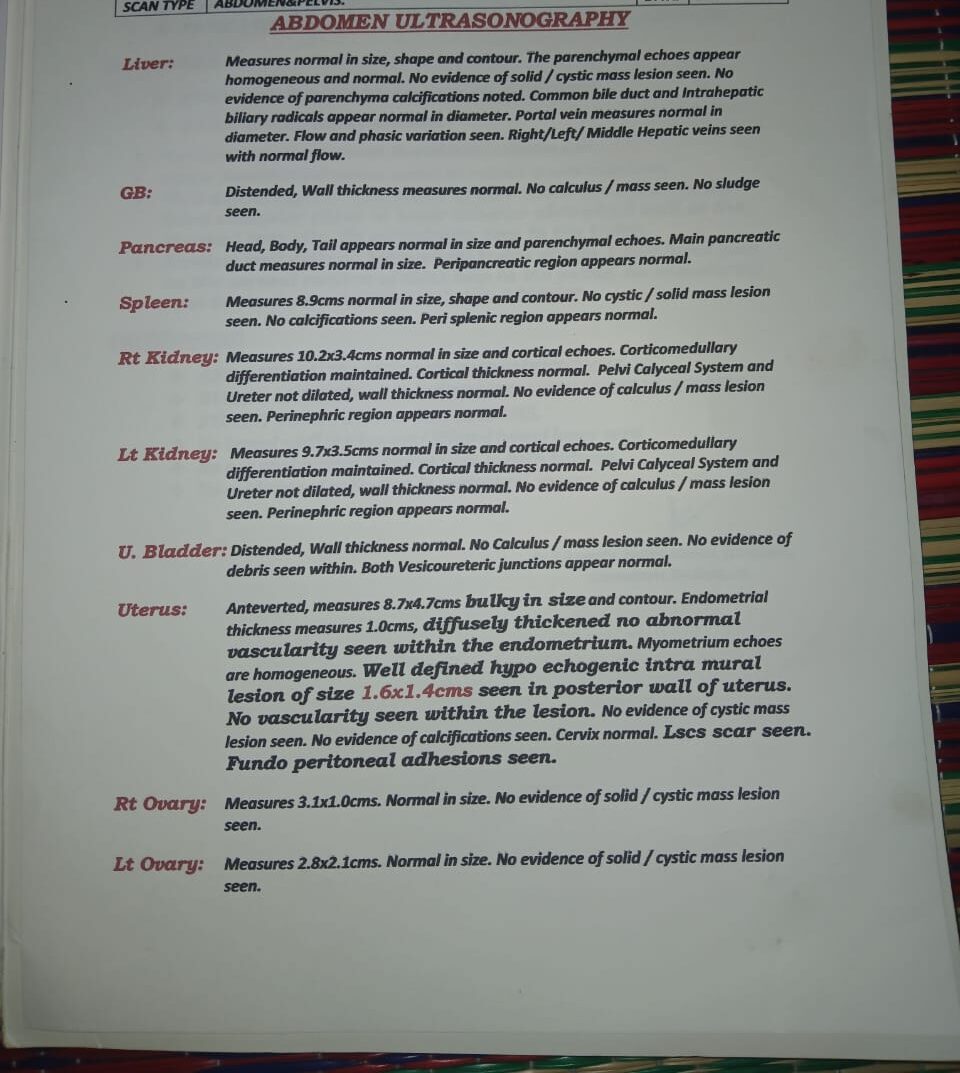
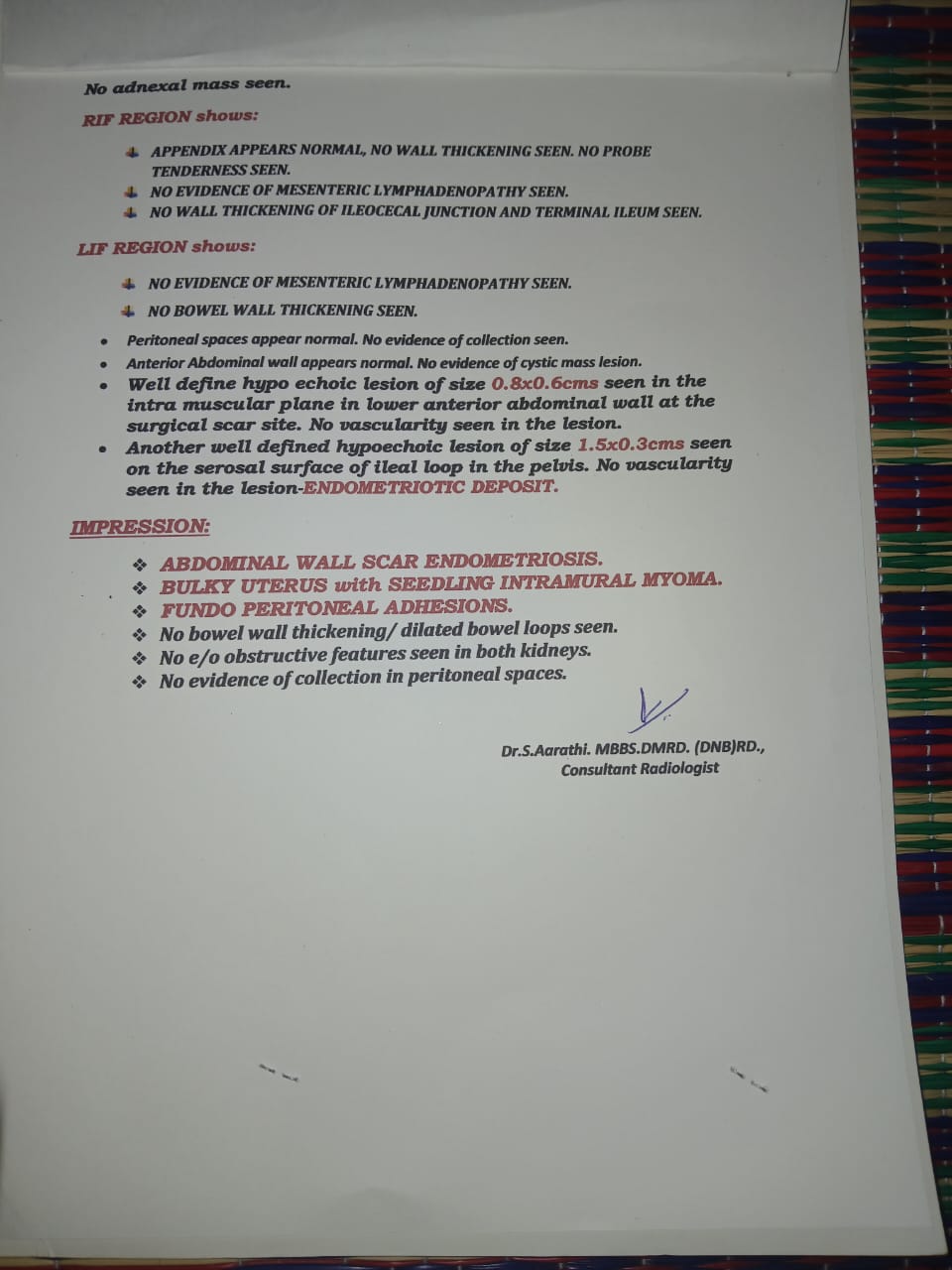
  • Initial USG: Scar endometriosis, bulky uterus, intramural myomas
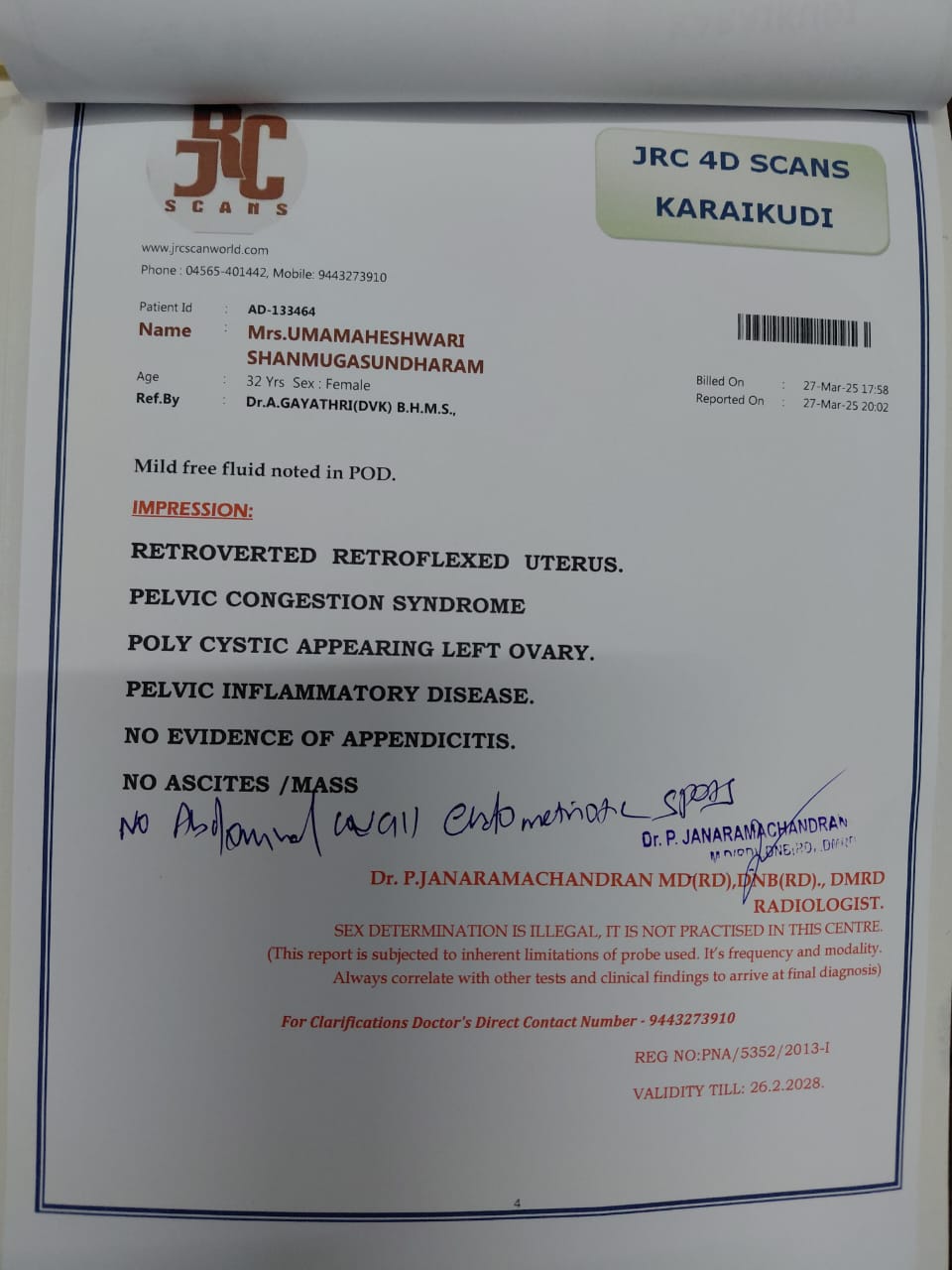
  • 3rd month USG: No myomas/endometriosis; impression – pelvic congestion
  • Thyroid: Normal

General Features

  • Mental: Irritable around menses
  • Thermal: Hot
  • Generals: Normal appetite/digestion except menses aggravation.

Analysis of Case

Totality of Symptoms

  1. Severe congestive dysmenorrhea
  2. Pain with nausea, vomiting, vertigo
  3. Difficult urination/defecation during menses
  4. Irritability during menses
  5. Irregular cycles, PCOD background
  6. Hot patient
  7. Uterine pathology (endometriosis, myomas, pelvic congestion)


Miasmatic Background

  • Psora: Irritability, irregular cycles, vertigo
  • Sycosis: Myomas, PCOS, congestion tendency
  • Syphilis: Endometriotic lesions, tissue destruction
    Overall: Syco-syphilitic with psoric overlay

Prescription & Rationale

  1. Belladonna 200C – 1 hrly × 3 doses (acute, up to 5/day)
    • Covers violent congestion, dysmenorrhea, hot patient
  2. Magnesium phosphoricum 6X – 2 hrly till pain relief
    • Supportive for spasms
  3. Nux vomica 200C – 1 dose daily × 3 days, mid-cycle repeat
    • Irritability, oversensitivity, GI/urinary issues, morning aggravation, pelvic congestion
  4. Lapis albus 3X – 2 TDS × 1 month
    • Affinity for uterine fibroids/myomas, long-term support

Repertorial Chart


Rubrics

Bell.

Nux-v.

Lach.

Lapis-alb.

Mind – Irritability – menses

2

3

2

Female – Dysmenorrhea – congestive

3

2

3

Stomach – Vomiting – menses

2

3

1

Vertigo – morning

1

3

1

Bladder – Difficult urination – menses

2

2

2

Rectum – Difficult stool – menses

1

3

Generals – Heat, hot patient

2

2

3

Generals – Tumors/myomas

2

3


Totals

  • Belladonna: 13 (acute congestion, hot)
  • Nux vomica: 16 (constitutional, congestion, irritability)
  • Lachesis: 12 (differential, less stool/urine affinity)
  • Lapis albus: 3 (organ remedy for fibroids)

Final Remedy Selection

  • Acute: Belladonna
  • Chronic: Nux vomica
  • Supportive: Lapis albus

Follow-up

  • 1st month: Pain ↓ 70%, no hospitalization
  • 2nd month: Period delayed 1 week, pain manageable
  • 3rd month: Pain returned when Nux omitted mid-cycle
    1. USG: No myomas/endometriosis; impression – pelvic congestion
    2. TSH: Normal
  • Plan: Continue Nux (mid-cycle), Lapis albus, lifestyle advice (walking, yoga, diet, weight control)

Discussion

  1. Acute vs. chronic: Belladonna for acute crises; Nux for constitutional state; Lapis albus for fibroids
  2. USG follow-up: Showed disappearance of myomas/endometriosis → objective evidence
  3. Miasmatic view: Syco-syphilitic predominance guided remedy depth
  4. Lifestyle role: Yoga, diet, exercise, enhanced outcome

Conclusion

 This case demonstrates classical Homoeopathy’s role in endometriosis and uterine pathologies. With individualized remedy choice and miasmatic assessment, the patient achieved major symptomatic relief and sonological improvement. Belladonna, Nux vomica, and Lapis albus addressed acute, constitutional, and organ levels respectively. Lifestyle support proved essential for sustained results.

Dr.Raji Arabi

Industrious Rubric in Homoeopathy
Dr.Raji Arabi

Mommy’s Love – Parenting tips Parenting is like writing public exams!! How we influence – Parenting tips Being Intentional – Parenting tips …
Dr.Raji Arabi

Precautions to take Homoeopathy medicine
Dr.Raji Arabi

What to take and what to avoid in Homoeopathy