
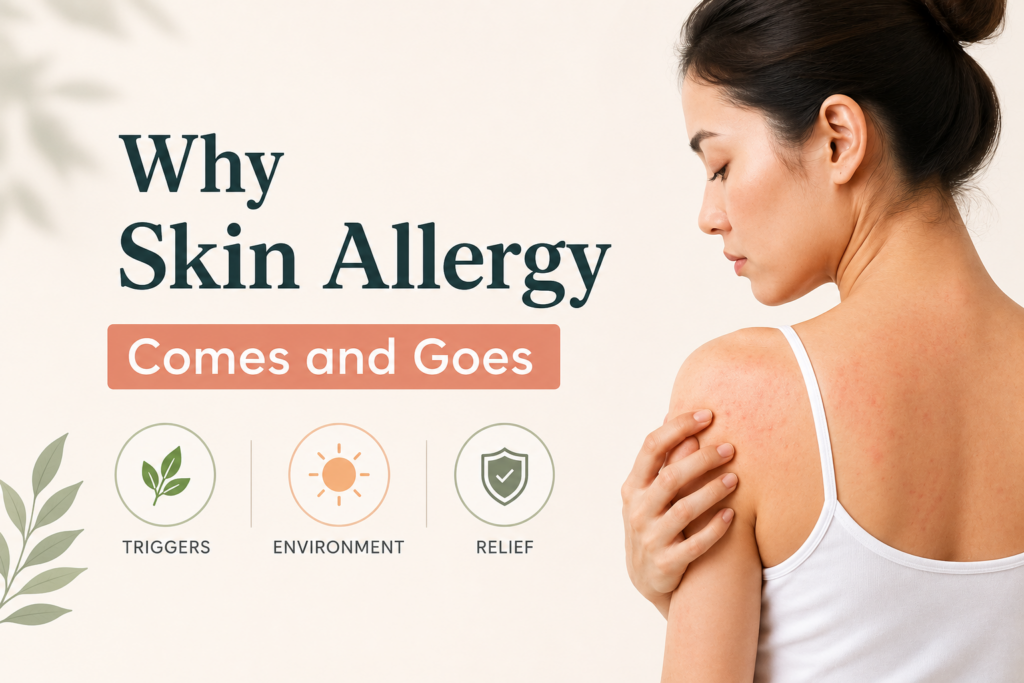
Why Skin Allergy Comes and Goes: Understanding the Pattern Behind Recurring Flare-Ups
If you’ve ever dealt with a skin allergy, you already know how confusing it can be. One day your skin is completely fine, and the next day—itching, redness, rashes, or irritation suddenly appear.
Then just as mysteriously, it disappears.
And after a few days or weeks… it comes back again.
Here’s the thing—this “on and off” pattern is not random. Your skin is trying to tell you something. The real question is: are you listening closely enough?
Let’s break down why skin allergies come and go, what triggers them, and how you can manage them in a way that actually works long term.
What Is a Skin Allergy?
A skin allergy is your body’s immune response to something it perceives as harmful—even if that substance is normally harmless.
Common symptoms include:
- Itching
- Redness
- Dry or scaly patches
- Small bumps or rashes
- Swelling or irritation
Conditions like eczema, urticaria (hives), and contact dermatitis all fall under this category.
But what makes it confusing is not the allergy itself, it’s the pattern of recurrence.
Why Skin Allergy Comes and Goes
Let’s get straight to the real reasons.
1. Exposure to Triggers Is Not Constant
Your allergy doesn’t randomly appear—it follows exposure.
Common triggers include:
- Certain foods (like seafood, nuts, or dairy)
- Dust and environmental allergens
- Soaps, detergents, or skincare products
- Weather changes (heat, cold, humidity)
- Fabrics or metals
You may not notice it immediately, but your skin reacts when exposure reaches a certain level.
That’s why:
- You’re fine for days
- Then suddenly react
2. Your Immune System Fluctuates
Your body is not the same every day.
Factors that affect your immune response include:
When your immunity is slightly low or overreactive, your skin becomes more sensitive.
This explains why:
- The same product is fine one week
- And causes a reaction the next
3. Stress Is a Major Hidden Trigger
This is often underestimated.
Emotional stress can directly affect your skin through the mind-body connection.
You might notice:
- Flare-ups during exams, deadlines, or family stress
- Increased itching when anxious
- Delayed healing when emotionally disturbed
Your skin is not separate from your mind—it reflects it.
Read also: Early warning signs of Mental Health symptoms
4. Weather and Environmental Changes
Climate plays a big role.
- Hot weather → sweating → irritation
- Cold weather → dryness → itching
- Humidity → fungal aggravation
That’s why some people get allergies only during:
- Summer
- Winter
- Seasonal transitions
5. Temporary Suppression Instead of True Healing
This is one of the most important reasons.
Many treatments focus on suppressing symptoms, not addressing the root cause.
For example:
- Steroid creams reduce inflammation quickly
- Antihistamines reduce itching
But once you stop them:
- The allergy returns
This creates the “comes and goes” cycle.
6. Gut and Internal Health
Your skin reflects what’s happening inside your body.
Issues like:
- Poor digestion
- Food intolerance
- Imbalanced gut health
can trigger skin reactions.
If the internal imbalance remains, the allergy keeps returning.
7. Habit Patterns and Lifestyle
Sometimes, it’s not one big trigger—but small repeated habits:
- Using harsh soaps
- Frequent product changes
- Poor hydration
- Irregular sleep
These slowly irritate the skin, leading to periodic flare-ups.
Common Types of Recurring Skin Allergies
Understanding the type helps you manage it better.
Eczema (Atopic Dermatitis)
- Dry, itchy patches
- Often linked to stress and weather
- Common in children and adults
Urticaria (Hives)
- Sudden raised itchy welts
- Often triggered by food, stress, or unknown factors
- Can appear and disappear within hours
Contact Dermatitis
- Reaction to direct contact (soaps, jewelry, cosmetics)
- Localized rash
- Improves when the trigger is avoided
Read also: 10 Powerful foods that heal your brain & mind naturally
How to Identify Your Triggers
Here’s what actually helps in real life.
1. Maintain a Skin Diary
Track:
- What you eat
- Products you use
- Weather conditions
- Stress levels
Patterns will start to appear.
2.Observe Timing
Ask:
- Did it happen after a specific food?
- After using a new product?
- During stress?
3. Elimination Method
Remove one suspected trigger at a time and observe changes.
What You Can Do to Prevent Recurrence
Now let’s focus on solutions that go beyond temporary relief.
1. Simplify Your Skincare
- Use mild, fragrance-free products
- Avoid frequent product switching
- Moisturize regularly
2. Strengthen Internal Health
- Eat balanced, fresh food
- Stay hydrated
- Support gut health
3. Manage Stress Actively
Simple practices help:
- Walking
- Deep breathing
- Meditation
- Spending time in calm environments
Read also: What is Spiritual Health & How to improve it
4. Avoid Known Triggers
Once identified, reduce exposure as much as possible.
5. Avoid Overdependence on Steroids
Use them only when necessary and under medical guidance.
A Holistic View: Why Treating Only Skin Is Not Enough
Here’s what many people miss.
Skin allergy is not just a skin problem.
It is a systemic response involving:
- Immune system
- Emotional state
- Lifestyle patterns
Unless these are addressed, the cycle continues.
How Homeopathy Approaches Recurring Skin Allergies
Homeopathy focuses on the individual, not just the disease.
Instead of suppressing symptoms, it works to:
- Balance the immune response
- Address underlying sensitivity
- Reduce recurrence tendency
Treatment is based on:
- Type of skin symptoms
- Triggers
- Emotional patterns
- Overall health
Many patients notice:
- Reduced frequency of flare-ups
- Milder symptoms
- Better long-term control
When Should You See a Doctor?
Don’t ignore persistent symptoms.
Seek professional help if:
- Allergy is frequent or worsening
- Severe itching or swelling occurs
- Sleep is disturbed
- There is no improvement with basic care
Early guidance can prevent chronic patterns.
Final Thoughts
Skin allergies that come and go are not random—they follow a pattern.
What this really means is:
Your body is reacting to something, repeatedly.
Instead of chasing temporary relief, focus on:
- Identifying triggers
- Supporting internal balance
- Choosing the right treatment approach
With the right understanding and care, you can break the cycle—and give your skin the stability it needs.
If you’re struggling with recurring skin allergies that keep coming back, a personalized, holistic approach can help identify the root cause and reduce flare-ups naturally.
Book a consultation today and take the first step toward long-term skin health.
📍 Al Ain Book your consultation today.
Consultation is available at Emirates International Hospital & Polyclinic
Book appointment via hospital reception – 037637777
📩 Book via WhatsApp WhatsApp enquiries for appointments only.
Response within clinic hours.- +91 9940395676
Autism: Types, Signs & Symptoms, and Homeopathic Management What is Autism? Autism Spectrum Disorder (ASD) is a neurodevelopmental condition that affects communication, …

Anorexia Nervosa: Understanding, Causes, and How to Overcome It Anorexia nervosa is a serious eating disorder that affects millions of individuals worldwide. …
Psoriasis – Healed through Homoeopathy Psoriasis is a chronic inflammatory skin disease in which skin cells multiplies at the rate of higher …
Miliaria is a common skin disease caused by blockage and/or inflammation of eccrine sweat ducts. It is otherwise called Heat rash/ Sweat …
Share this post: on Twitter on Facebook on LinkedIn

